
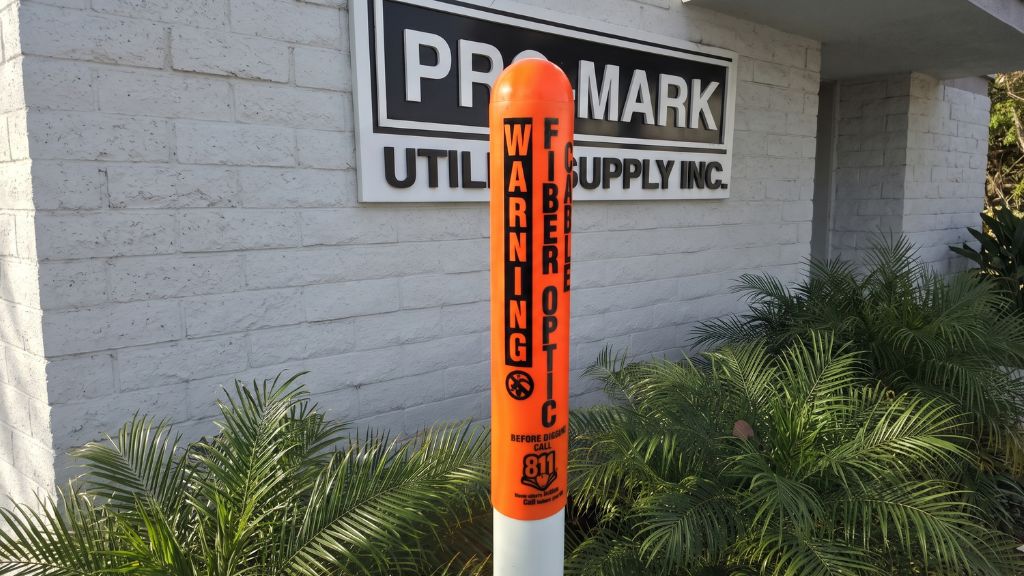
FOC marker requirements in the UAE call for visible, correctly spaced markers along a fiber optic cable route, so excavation crews and maintenance teams can identify buried fiber before digging near it. Meeting FOC marker requirements protects telecom infrastructure and reduces the risk of accidental cable strikes on active construction sites. This guide covers what belongs on an FOC cable marker, where to place fiber optic route markers, which marker types suit UAE ground conditions, and how proper marking supports safer telecom rollouts.
Key Takeaways
- FOC marker requirements typically cover marker placement, spacing, colour, and the information printed on each marker post.
- Fiber optic route markers should sit above ground at regular intervals along the buried cable route, including at every change of direction.
- A GRP FOC post is a common marker post choice for underground fiber optic cables because it resists corrosion and UV degradation.
- An FOC cable marker should show the FOC colour code, a chainage reference, and emergency contact information, ideally in a bilingual Arabic/English decal.
- Clear FOC cable identification reduces accidental cable damage during excavation, protecting both telecom infrastructure and project timelines.
What Are FOC Marker Requirements?
FOC marker requirements are the placement, spacing, and information standards that apply to markers along a fiber optic cable route. They exist so that anyone excavating near underground fiber optic cables — a contractor, a utility crew, a maintenance technician — sees a clear warning before they dig. On UAE telecom rollouts, these requirements typically come from the network operator or duct owner responsible for that stretch of UAE telecom infrastructure.
What Information Belongs on an FOC Cable Marker?
An FOC cable marker generally needs enough detail for a reader to understand what lies below without consulting a drawing. Cable identification markers along a fiber route typically carry the service type, the FOC colour code, a chainage or route reference number, and an emergency contact detail. Many UAE projects also require a bilingual Arabic/English decal, so the warning reaches the full range of site personnel working near the route.
Marker Types Suited to Underground FOC Cables
Different points along a route call for different marker formats. The table below outlines common options used for FOC cable identification on UAE projects.
| Marker Type | Typical Use | Notes |
| GRP FOC post | Above-ground route marking along open corridors | Non-conductive, resists corrosion and UV degradation over time |
| OFC joint chamber marker | Marking buried joint chamber or splice locations | Flush or low-profile marker set at grade level |
| Buried fiber warning decal | In-trench warning tape or tile above the cable | Alerts excavators before they reach the cable itself |
| Route marker plate | Fixed to walls, poles, or kerbs along the route | Carries route reference and screen-printed or engraved legend |
How FOC Marking Reduces Accidental Cable Damage
Underground fiber optic cables carry no visible sign of their presence once buried, so above-ground utility marker posts are the only warning an excavator gets. Consistent fiber optic route markers, spaced correctly and kept legible, give crews time to stop and verify before a strike happens. A single damaged cable can disrupt telecom infrastructure for thousands of users, so reliable FOC marking is a practical safeguard, not just a compliance item.
What Information Belongs on an FOC Cable Marker?
An FOC cable marker generally needs enough detail for a reader to understand what lies below without consulting a drawing. Cable identification markers along a fiber route typically carry the service type, the FOC colour code, a chainage or route reference number, and an emergency contact detail. Many UAE projects also require a bilingual Arabic/English decal, so the warning reaches the full range of site personnel working near the route.
Where Should Fiber Optic Route Markers Be Placed?
Fiber optic route markers follow the trench route alignment at regular intervals, so no long stretch of buried cable goes unmarked. Additional markers typically sit at every change of direction, at road or utility crossings, and at each OFC joint chamber marker location where a splice or access point exists below ground. Sequential chainage numbering on each marker helps crews match a specific point on site to the as-built drawings.
Expert Insight
The marker detail clients ask us to get right most often is legibility after installation, not before it. A screen-printed legend that reads clearly on day one can fade fast under direct UAE sun if the wrong print process is used. We specify UV-stable printing and colour-through options for FOC posts by default, so the route reference and contact details stay readable for years, not just for the first site inspection.
Conclusion
Meeting FOC marker requirements comes down to clear placement, correct spacing, and complete information on every marker post along the route. Since exact rules vary by duct owner and project, confirm the specification early in the rollout.
For FOC marker posts made to your project’s route and labelling requirements, visit cdllc.ae or message us on WhatsApp at https://wa.me/971501463864.
FAQ
What are the FOC marker requirements in the UAE?
FOC marker requirements generally call for visible above-ground posts or plates along the cable route, spaced at regular intervals, showing the FOC colour code, a route or chainage reference, and an emergency contact. Exact rules vary by utility authority and project, such as Etisalat or du duct routes.
What information should be included on an FOC cable marker?
An FOC cable marker typically shows the service type, a warning that fiber optic cable lies below, a chainage or route reference number, and an emergency contact detail, often in bilingual Arabic/English decal format.
Where should fiber optic cable markers be placed?
Fiber optic route markers are placed at regular intervals along the trench route alignment, at changes of direction, and at OFC joint chamber locations, so the route stays visible without excavation.
What type of marker post is suitable for underground FOC cables in the UAE?
A GRP FOC post is the common choice for underground FOC cables, since glass reinforced plastic resists corrosion and UV degradation while remaining non-conductive near other buried services.
How can proper FOC marking help prevent accidental cable damage?
Visible, correctly spaced fiber optic route markers give excavation crews advance warning of a buried fiber optic cable, reducing the chance of a costly strike during digging or trenching work.
Do FOC markers need to be bilingual?
Many UAE projects require FOC cable markers to carry both Arabic and English text, since a bilingual Arabic/English decal makes the warning clear to the full range of site personnel.
Who sets the FOC marker spacing and format on a project?
The telecom operator or duct owner, such as Etisalat or du, along with the project consultant, typically sets the marker spacing, colour, and format for that specific route.