
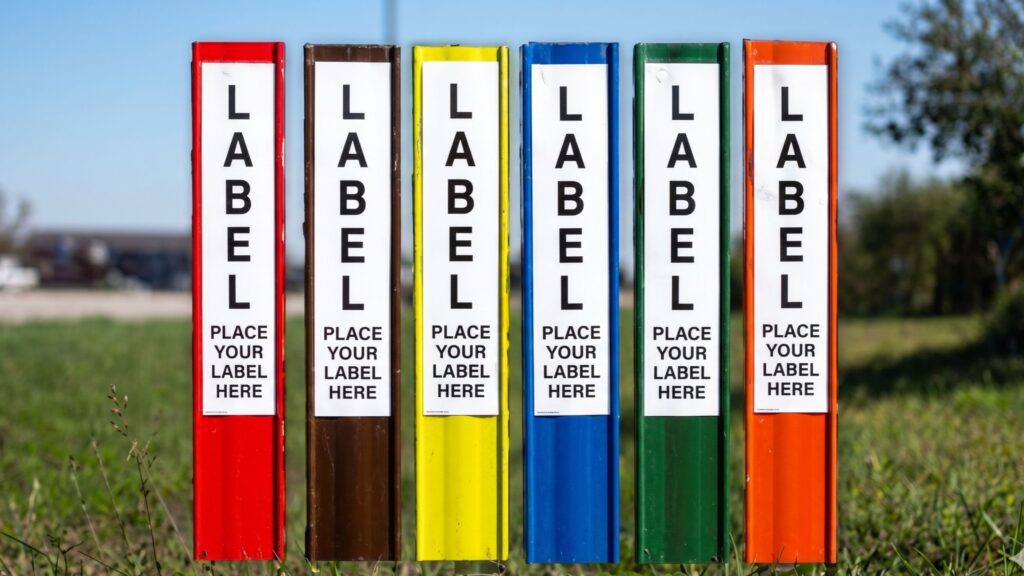
A utility marker colour code assigns a specific colour to each type of underground service, so site teams can identify pipelines, cables, and ducts before digging or maintenance work begins. On UAE construction and infrastructure sites, consistent utility marker colour coding reduces the risk of striking live cables or pressurised pipelines. This guide explains how utility marker colour codes work, which colours typically represent which services, and how MEP engineers, contractors, and facilities teams apply them across UAE projects.
Key Takeaways
- A utility marker colour code lets site teams identify buried services — power, water, telecom, gas — without excavation.
- Colour-coded utility marker posts sit above ground to flag the route of underground utilities below.
- Consistent utility marker colour coding across a project reduces excavation risk and supports construction site safety.
- Colour alone is not a legal identification method — markers are paired with text, symbols, or chainage numbering for full utility identification systems.
- Procurement teams should confirm the client or utility provider’s exact colour requirement before ordering, since practice can vary by project and authority.
What Is a Utility Marker Colour Code?
A utility marker colour code is a visual system that assigns a distinct colour to each category of underground utility infrastructure. Utility marker posts installed along a route use this colour, combined with printed text, to show what runs beneath the surface. The purpose is straightforward: give anyone working near buried services — an excavator operator, a maintenance technician, a surveyor — an immediate visual cue before they dig or drill.
Why Utility Marker Colour Coding Matters on UAE Sites?
UAE construction sites often have multiple utilities running close together — power cables, water lines, telecom ducts, and drainage — sometimes installed at different times by different contractors. Clear utility identification systems reduce the chance of a damaged cable or pipeline during excavation, which can cause service outages, safety incidents, and costly delays. Utility marker colour codes give HSE and safety officers a fast, visible reference on site, supporting construction site safety without needing to consult drawings for every dig.
Common Underground Utility Colour Categories
Colour conventions for underground utilities are widely used but not universally fixed — the exact palette can vary between clients, contractors, and utility authorities. General practice on many UAE sites follows a broadly similar pattern to international norms:
| Service Type | Typical Marker Colour | Notes |
| Electrical / power cables | Red or orange | Used for underground cable identification along HV and LV routes |
| Potable water | Blue | Common for water pipeline identification |
| Sewerage / drainage | Black or grey | Marks non-potable or waste water lines |
| Telecom / fibre routes | Yellow or orange | Marks duct routes for cable and fibre services |
| Gas lines | Yellow | High-visibility colour for gas pipeline identification |
How Utility Marker Posts Apply the Colour Code
Utility marker posts are the physical above-ground component that carries the colour code. A marker post is typically colour-through or colour-printed, then labelled with the service type, direction, and sometimes a contact number or chainage reference. This pairing of colour and text is what makes pipeline identification and underground cable identification reliable — the colour gives a fast visual read, and the text confirms the detail.
Colour Coding Within MEP Identification
Colour coding also extends indoors and within MEP identification systems, where pipes, valves, and ductwork are colour-banded to show what they carry — chilled water, hot water, fire-fighting lines, or drainage. This is a related but separate practice from outdoor utility marker colour codes: MEP identification typically follows building-level labelling schemes, while utility marker posts address buried services across a wider outdoor corridor.
Best Practices for Applying Utility Marker Colour Codes
Consistency is the main factor that makes a utility marker colour code useful. A colour scheme only works if it’s applied the same way across an entire project or site, and if everyone working on site is briefed on what each colour means. Facilities and maintenance managers benefit most when colour coding stays consistent over time, since inconsistent recolouring after repairs or extensions can undermine the system’s reliability.
Expert Insight
On the production side, the most common request we get isn’t “what colour should this be” — it’s “can you match the colour we already used three years ago on this site.” Colour consistency matters more than which palette a project starts with. We keep colour references on file per client so a replacement marker post matches the original installation exactly, rather than introducing a slightly different shade that confuses the next site team.
Conclusion
A utility marker colour code gives UAE construction and infrastructure sites a fast, visual way to identify buried services and reduce excavation risk, but it only works when applied consistently and paired with clear text. Since exact colour requirements vary by client and authority, confirm the specification before ordering. For utility marker posts made to your project’s exact colour and labelling requirements, visit cdllc.ae or message us on WhatsApp at https://wa.me/971501463864.
FAQ
What is a utility marker colour code?
A utility marker colour code is a system that assigns a specific colour to each type of underground utility, helping site teams identify pipelines, cables, and ducts before excavation or maintenance.
Is there one official utility marker colour standard in the UAE?
There is no single fixed UAE-wide colour standard for all utilities; practice varies by project, consultant, and utility authority, so it’s best to confirm requirements with Dubai Municipality or the relevant service provider before specifying.
What colour is usually used for underground power cables?
Underground electrical cables are commonly marked in red or orange on UAE sites, though the exact shade can depend on the client or utility provider’s specification.
Why do utility marker posts need text as well as colour?
Colour alone can be ambiguous or fade over time, so utility marker posts pair colour with printed text, symbols, or chainage numbers to give a complete, unambiguous utility identification.
Do MEP identification colours match outdoor utility marker colours?
Not always — MEP identification inside buildings follows its own pipe and duct labelling scheme, which can differ from the utility marker colour codes used for buried services outdoors.
How often should utility marker posts be checked or replaced?
There’s no fixed UAE-wide interval; most sites inspect utility marker posts periodically as part of routine facilities maintenance and replace any that are faded, damaged, or missing.
Who decides which colour code to use on a project?
The colour code is usually set by the client, consulting engineer, or relevant utility authority at project design stage, and contractors then apply it consistently across the site.